Showing posts with label western ladies' tresses. Show all posts

Monday, September 17, 2012

Another Visit to Lake Elizabeth


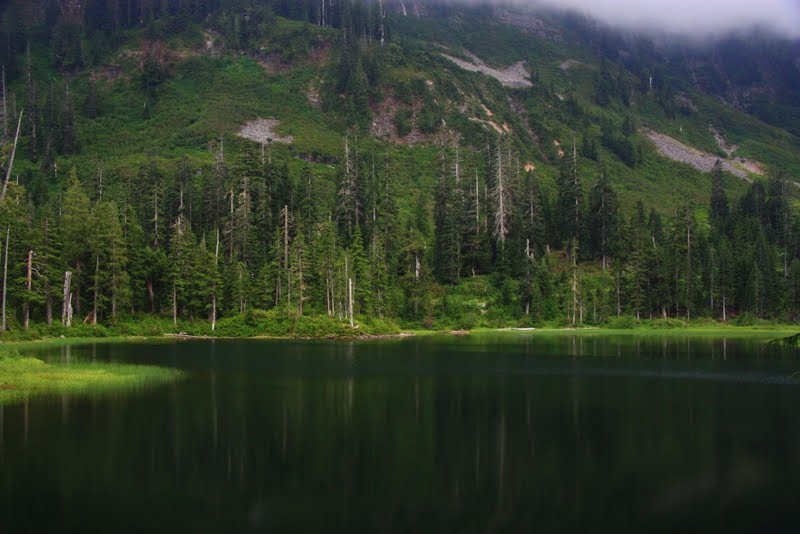
We made a number of visits to Lake Elizabeth this summer, now that the Forest Service road to the lake is open once again.  The visit does not require a 14 mile hike.  The road has been badly washed out in several locations and it took the Forest Service a long time, several years, to get it repaired and open again.  Until this year a visit required a 14 miles hike.

Lake Elizabeth is an alpine lake in the North Cascades near Skykomish, Washington.  It and the surrounding area support a rich variety of plants including many native orchids.  We had been there earlier in the season (July 18) to see some of the orchids that were in bloom then, but had a somewhat different purpose this time.

On this visit we were looking for one orchid especially, the tiny, rare, and elusive Chamisso's Orchid, Platanthera chorisiana, which had been reported from the sedge mats on the far side of the lake many years ago and again more recently.  We had searched there before both on our own and with others and not found it.


This time, knowing that it had been found again, we found it too, but it was well past its peak and photos of it will have to wait until another trip and another season.  We were not disappointed, however, since we found two other native orchids in bloom, as well as other treasures, including the lake itself which can be hiked around.


One of the other orchids we found in two varieties, the Tall White Northern Bog Orchis, Platanthera dilatata var. dilatata, and the Sierra Rein Orchis, Platanthera dilatata var. leucostachys.  These are two of three varieties of Platanthera dilatata, all three of them often referred to as Bog Candles and all of them sweetly scented.


These three varieties are distinguished by the length of the spur, in var. dilatata the spur is about the length of the lip and in var. leucostachys it is clearly longer than the lip.  We have not found the long-spurred variety as often as the others and were delighted to find it in this location, along with the Hooded Ladies' Tresses, Spiranthes romanzoffiana.


Saturday, October 29, 2011

Yellowstone National Park


On our way to Michigan this summer, we went through Wyoming.  We dropped down from Interstate 90 to the town of West Yellowstone, just outside the national park, and from there drove in Yellowstone National Park, spending most of day there exploring the west side of the upper loop (for those who have never been to Yellowstone, the main road through the park is a huge figure eight).

On our way into the park, we found that there was road work being done and long delays (as much as five hours, though we were only delayed a couple of hours).  Though at first we found this frustrating, we soon discovered that the stops were long enough that we could get out of the car and do some exploring along the road which there follows the Madison River.


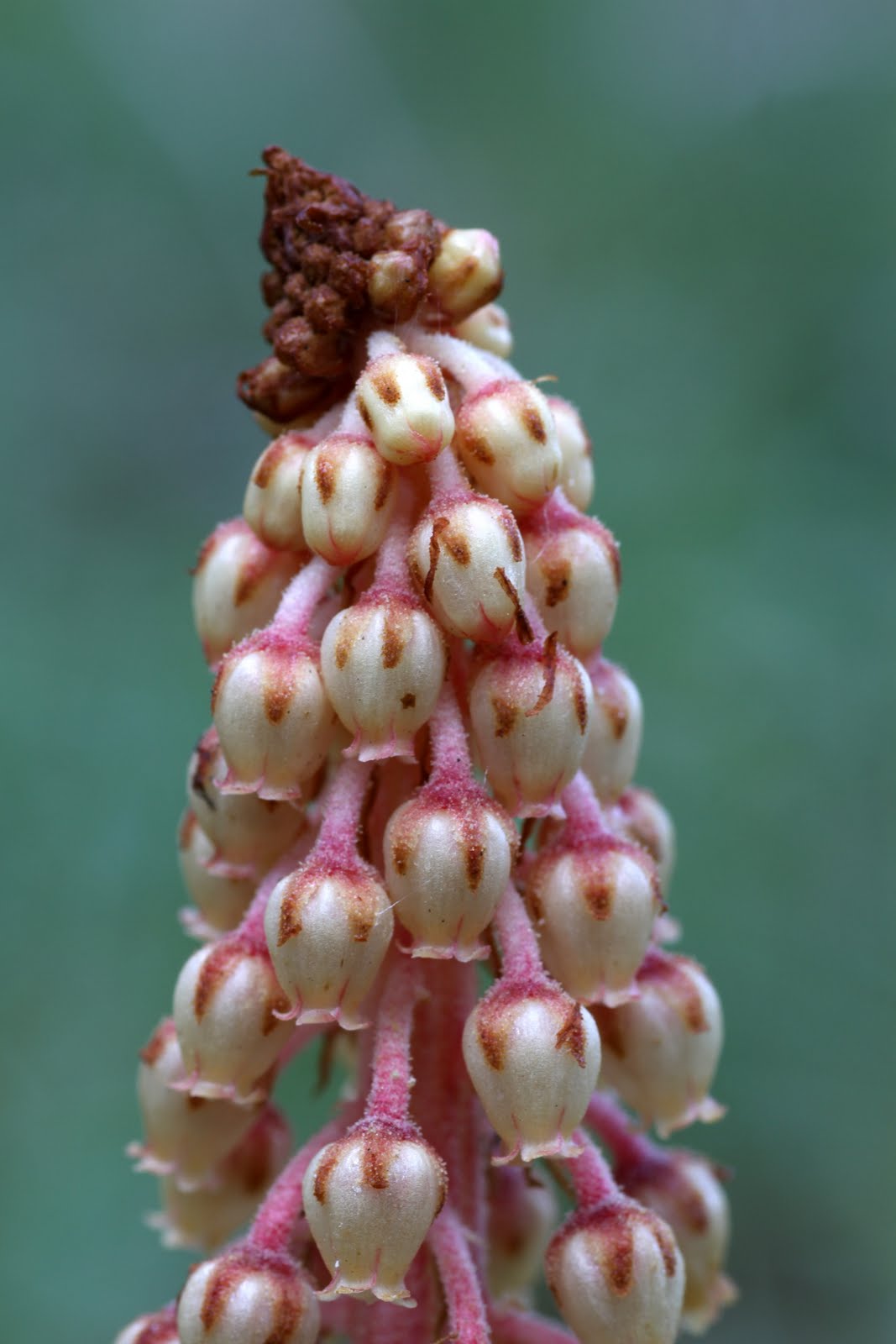
At one of the stops we found a native orchid, the Hooded Ladies' Tresses (Spiranthes romanzoffiana), growing right on the edge of the river and in the same area found the saprophytic plant, Pine Drops (Pterosphora andromeda).  In trying to get good pictures of these I nearly got left behind since traffic started moving and my wife had to move the car.


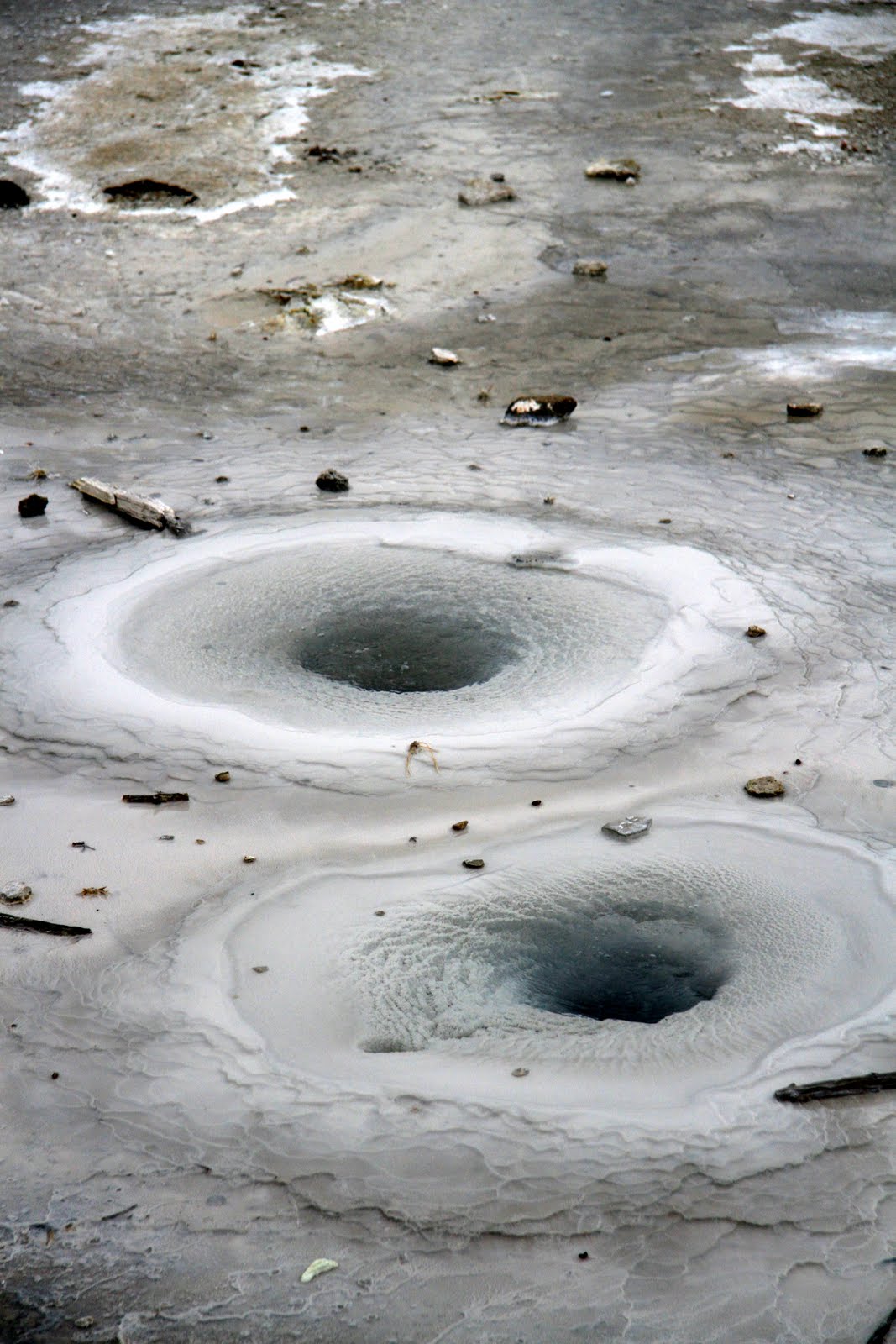
Once into the park proper we stopped at a number of locations on the west side of the upper loop.  One of the first was the Fountain Paint Pots where we found the Hooded Ladies Tresses once again ( we would find it at several more locations before the day was over).  There was also found the Fringed Gentian (Gentiana crinita), one of our favorite wildflowers, growing by the thousands in wetter areas.


Along the road we stopped at Nymph Lake, Roaring Mountain and Gibbon Falls, taking time at each location to get good photos.  In fact, we spent considerable time at Gibbon Falls so that I could take time exposures of the falls and so that I could teach my wife to take them also.  She, however, had forgotten her DSLR and had to be satisfied with using a point-and-shoot camera that we picked up in Idaho.


At the north end of the park we spent the rest of the day exploring the Mammoth Hot Springs area, driving the side roads and hiking the boardwalks.  The day was alternately sunny and cloudy and we were able to get some good pictures.  Near Canary Spring we saw and photographed a Killdeer who was looking for insects in the hot water at the top of the terraces.


As the sun went down we drove back to Norris Geyser Basin, hiked briefly there, and then drove across the middle of the park, down the east side of the lower loop and out of the park to place where we could set up our van for sleeping the night.  One the way out we saw elk, bison and grizzly bear sow with her cub, all near the road.  The pictures were poor, however, because of the low light.