Showing posts with label broad-leaved helleborine. Show all posts

Friday, December 5, 2014

Chuckanut Mountains and Larrabee State Park


The Chuckanut Mountains are a low range of mountains that run down from the Cascade Range to Puget Sound, the only place where the Cascades meet the sea.  They lie just south of Bellingham and include Larrabee State Park.  They are a popular place for hiking and biking and the both Interurban trail and Chuckanut Drive, a scenic drive above Puget Sound, connect the area with the city of Bellingham.

Larrabee State Park is a wonderful place, with miles of coastline and many trails up into the Chuckanuts.  It is a good place to see various ocean creatures in the tidepools, including starfish and anemones.  It has great beaches and unusual waterworn formations of Chuckanut Sandstone with many Eocene fossils of palms and other flora immbedded in the sandstone.  It is also a great place to hunt for native orchids and we go there

The Chuckanuts are less than an hour from our home and place we often go when hiking and orchid hunting and when time is limited.  We were there a number of times this summer hiking and hunting for orchids, exploring the tidepools along sea, and looking for the palm fossils for which the Chuckanuts are famous.  Oyster Dome, a steep two mile hike up Blanchard Mountain, was the place where I trained for our Mount Baker Climb.

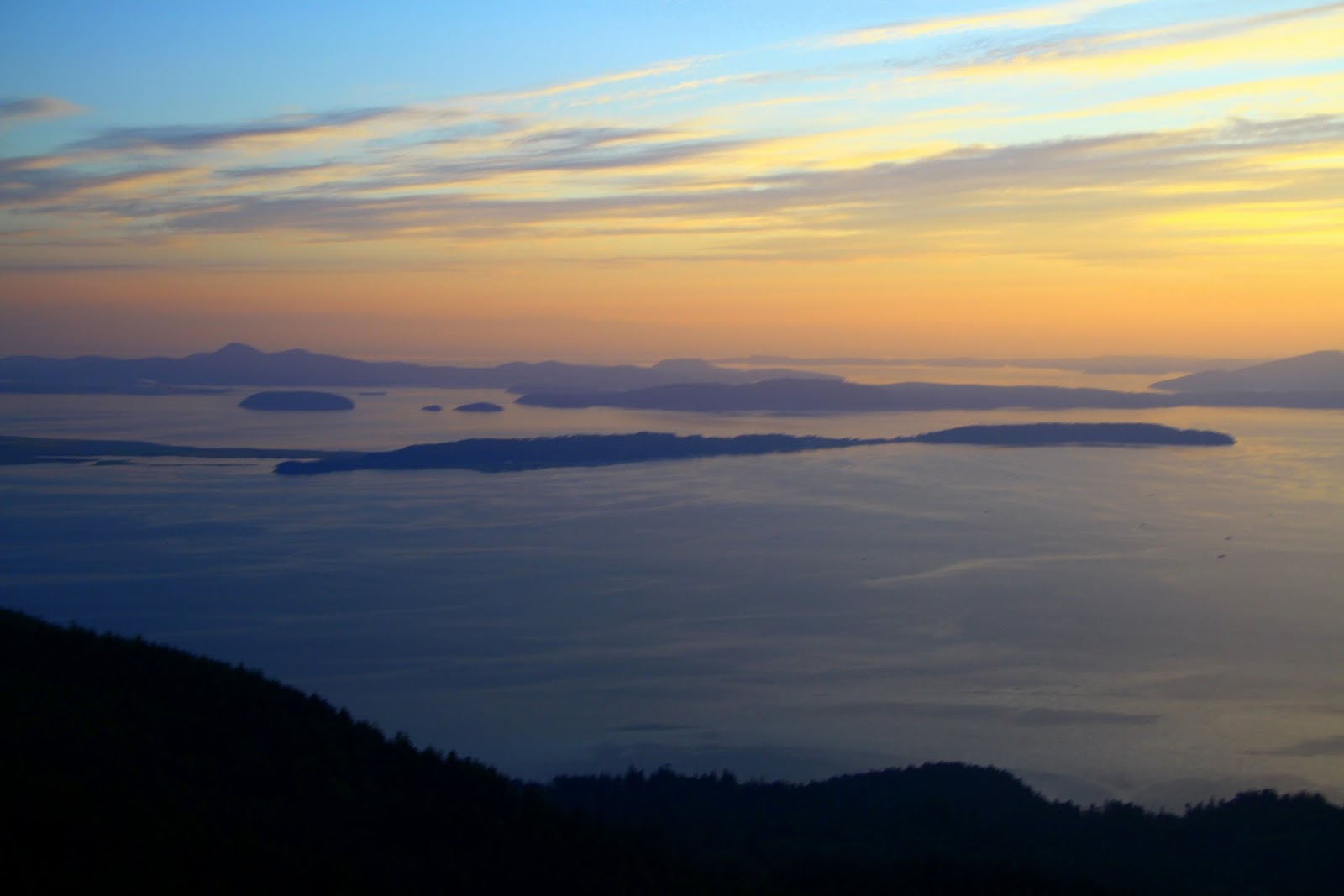
On one of the hikes, on the Labor Day holiday, we started late and reached the top of Oyster Dome as the sun was setting.  We witnessed a beautiful sunset but had to come down the trail in the dark and very few of us had lights, other than cell phones.  That made for a rather dangerous descent and one that will not quickly be forgotten.  I did not take any pictures on that hike except of the sunset because the light was so poor.   

I hiked the Oyster Dome trail five times in a three week period, several times alone and several times with others, though without taking a lot of pictures.  Because I was training I did the trail as quickly as possible each time and carried a 15-20 pound pack as well.  The first group of pictures are from that trail and from the brief stops for pictures and the rest from various other places in Larrabee State Park and outside of it. 

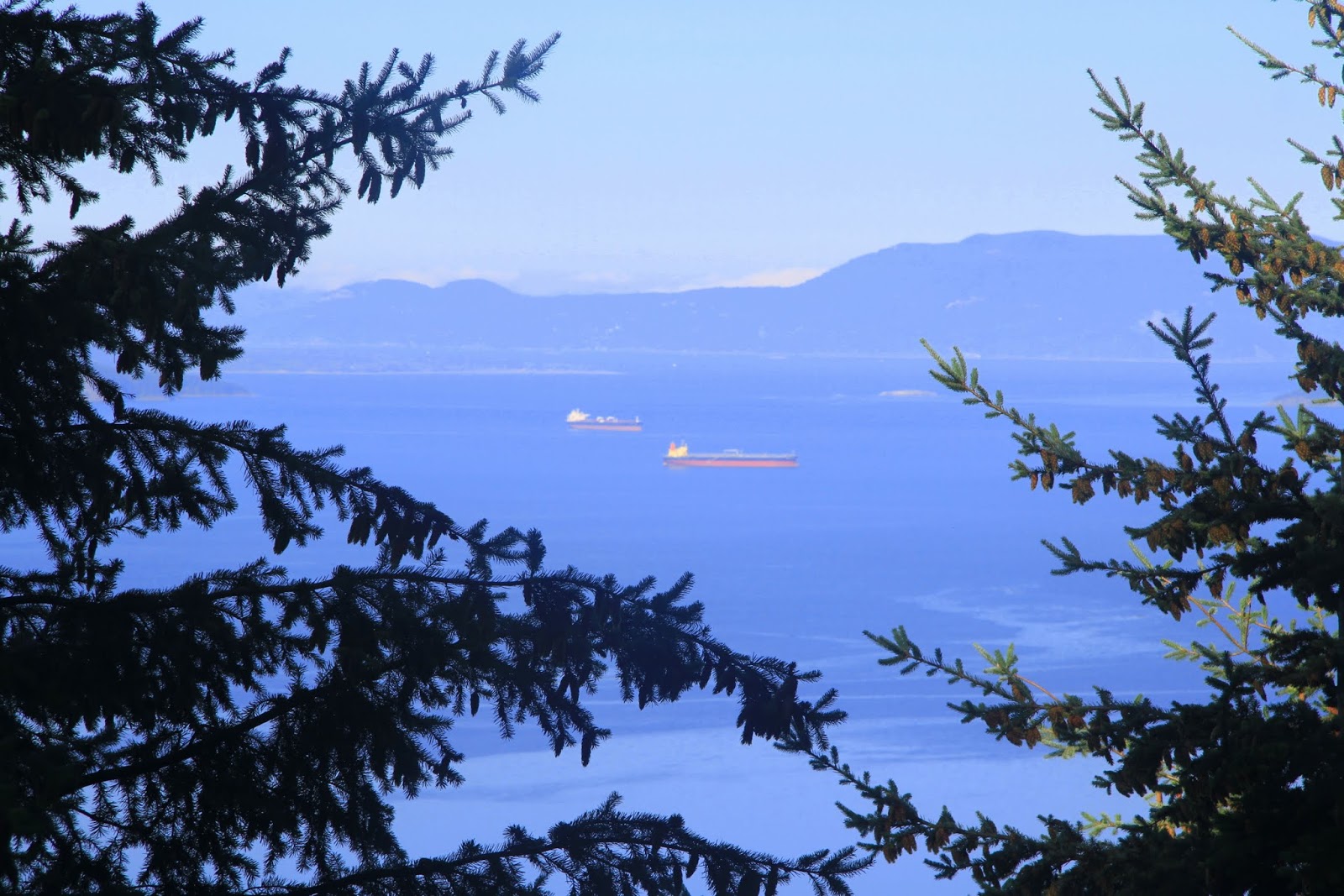
view from Oyster Dome with the San Juans, Anacortes and the Olympics in the distance
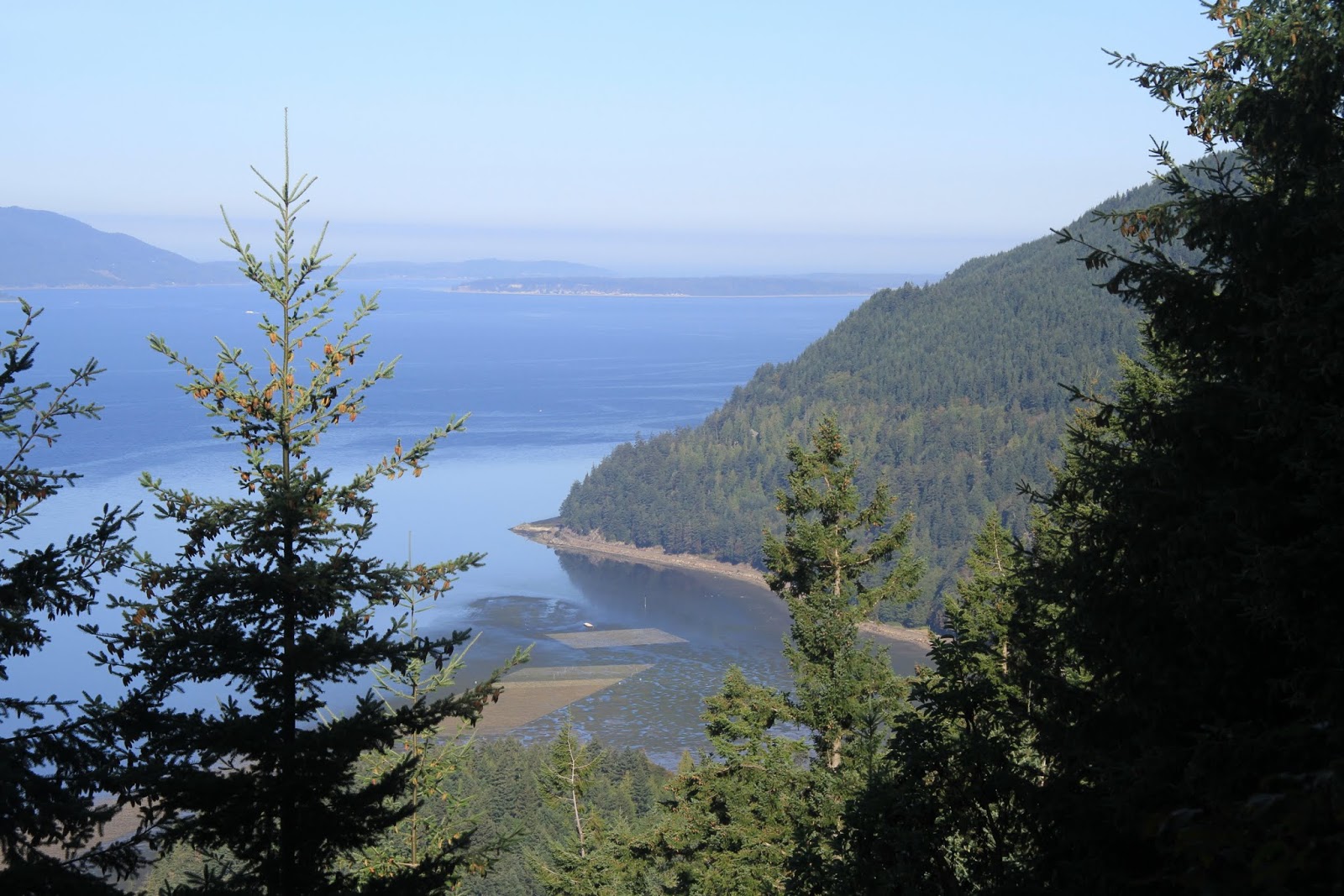


sunset from Oyster Dome


Sulfur Shelf Fungus


Scaly Pholiota


Blackening Brittlegill


trail sign


 immature Red-naped Sapsucker


Chuckanut Sandstone formations in Larrabee State Park


other photos from Larabee State Park


tidepools


Hedge Morning Glory


Paper Birch seeds and Madrone bark


views from Blanchard Mountain overlook


and some orchids

Broad-leaved Helleborine
(not a native but very well-established in Larrabee)


Striped Coralroot


Western Spotted Coralroot


Note: these photos were taken at different times during the year
and a few are older photos I've not posted before.

Friday, September 7, 2012

Clayton Beach and Goose Rock


Monday, August 13th, was the first day of the Northwest Washington Fair, held here in our town, and a good day to be out of town.  My wife was babysitting the children of a friend who was working at the fair, and so I made the day's excursion on my own.

I went first to Larrabee State Park south of Bellingham in the Chuckanut Mountains and walked the Clayton Beach trail looking for the Broad-leaved Helleborine (Epipactis helleborine) which grows there along the railroad tracks that run through the park


This orchid is interesting in that it is not native to the United States or Canada but has established itself across the northern USA and southern Canada.  I've seen it on the east coast and in the sand dunes in western Michigan along Lake Michgan.

In Larrabee it would appear that the orchid has been distributed by the railway since it grows in the brush along the tracks and along the trail leading from the tracks.  How it could have been distributed by rail, I have no idea, but that is the only place it can be found.


I found both a very pale pink and green and a dark purple version, though the darker flowers were all past their prime.  There were also some, not yet open, that had no hint of coloring at all and I would like to check them later to see if they are the alba variety.

Some of the plants were short, less than 30 cm but others were quite tall, up to 120 cm.  Most were single stems though the plant can form large clumps.  I spent several hours photographing them before continuing to the beach where I took more photos, including some of a dead shark.


I also spent some time taking pictures of the Madrona trees (Arbutusa menziesii).  I am fascinated by their peeling bark (this is normal), colorful wood, and beautiful forms.  This tree is native to the west coast from British Columbia to Mexico, primarily in the northern parts of this area.


Leaving Clayton beach, I headed back north to Deception Pass, the narrow strait that separates Whidbey Island from Fidalgo Island and which is crossed by a high bridge.  Parking at the pass I hiked to the top of Goose Rock at the northern end of Whidbey Island.


Goose Rock is a wonderful place for native wildflowers and orchids with its granite balds, areas of exposed rock that support a unique and wonderful flora.  It is 484 feet and provides great view of the Straits of San Juan de Fuca, of the San Juan Islands, and of the Cascades.


The hike to the top is less than a mile but steep.  I found three native orchids, the Long-Spurred and Flat-spurred Piperias (only a few of the former) and huge clumps of the Giant Rattlesnake Orchis, a plant so common in this area that I usually do not bother to take pictures.

Long-spurred Piperia


Flat-spurred Piperia


Giant Rattlesnake Orchis


I also found a lot of Indian Pipes, a ghostly white saprophyte that grows on the forest floors, in one case the largest clump of these I had ever seen, and a very unusual fungus or mushroom that looked a bit like bakery rolls.  Finished, I headed back home and back to work.