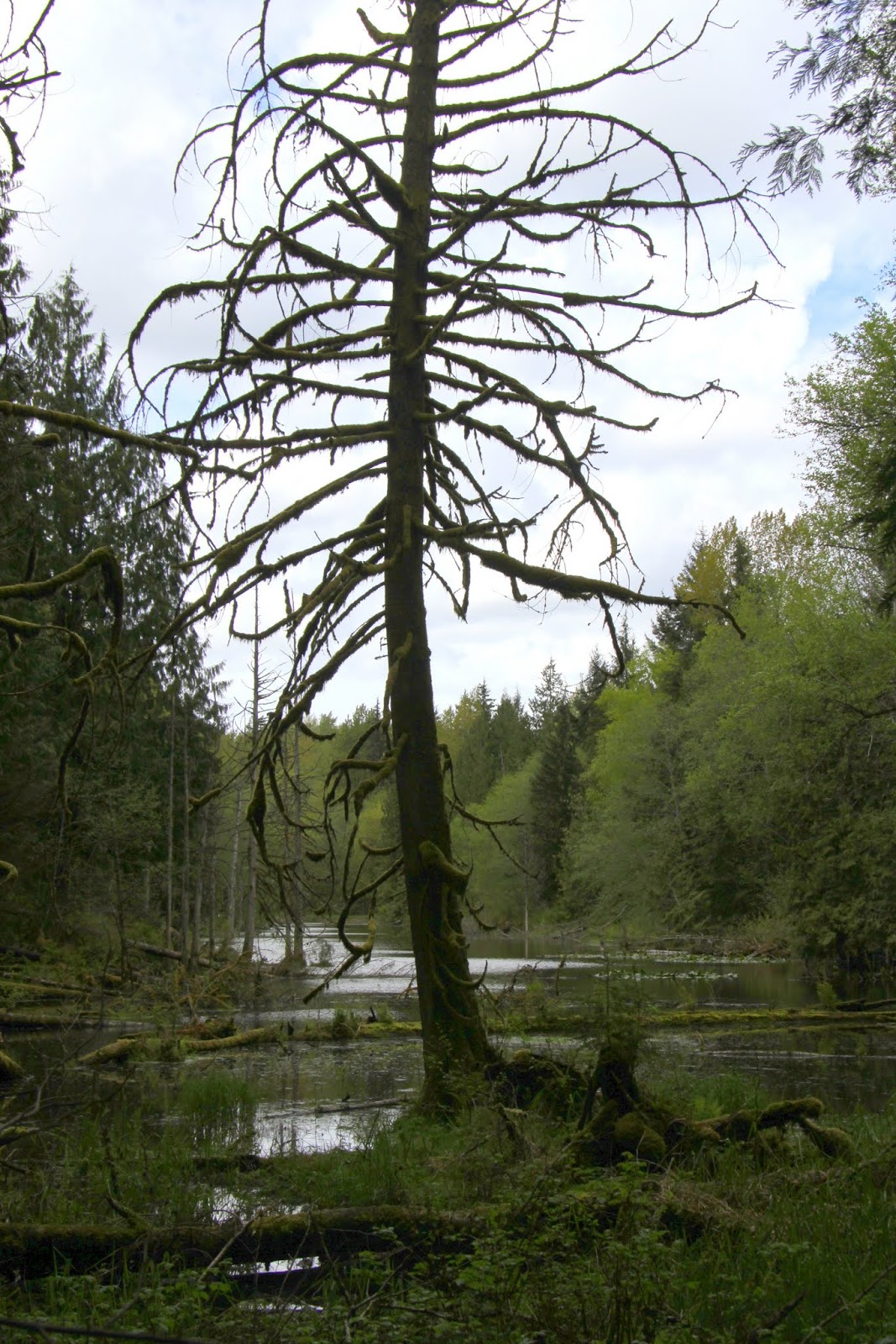
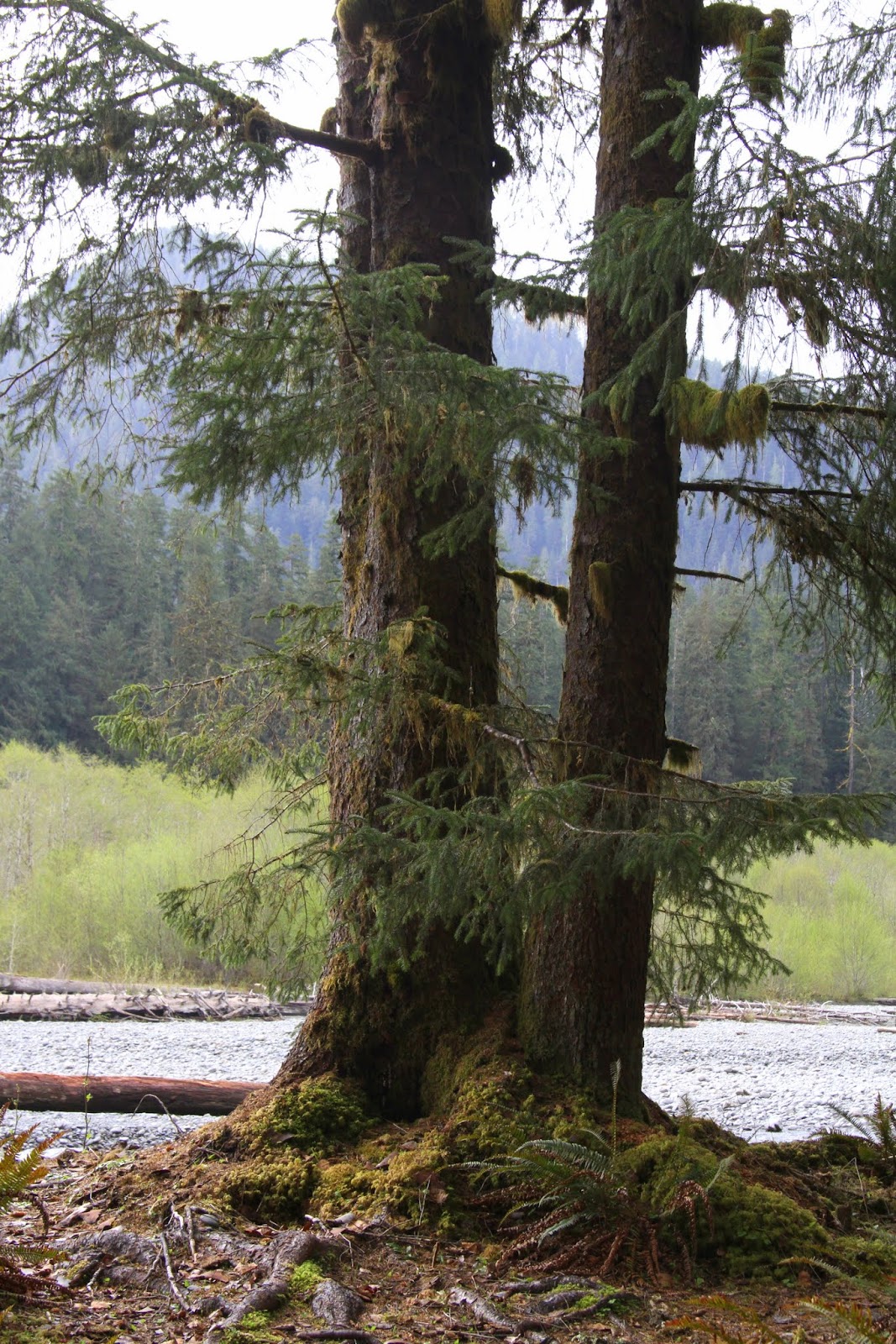
The first day of our trip to the Olympics we drove to the west side of the park and visited the Hoh rainforest, one of several temperate rainforests in Olympic National Park and on the Pacific Northwest coast. The day had been sunny but it was overcast and raining in the Hoh (what else would one expect in a rainforest?). We hiked some of the trails anyway and thoroughly enjoyed ourselves.
The Hoh receives 140-170 inches (355-432 cm) of rain every year and it shows. The trees, Sitka Spruce, Western Hemlock, Western Red Cedar, Douglas Fir and Big-leaf Maple, are massive and everything is draped in moss. The understory is covered with ferns and lichens and contributes to the rich green of the forest, which we tried to capture, though I'm sure our efforts fell short.
The drive from the coast to the rainforest is about 12 miles, much of the drive following the Hoh River.
One of the distinctive trees of the northwest is the Big-leaf Maple.
These were just starting to leaf out and flower.
We stopped along the way to photograph some Skunk cabbage,
one of my wife's favorite photographic subjects.
Near the entrance to the park we saw first a herd of Roosevelt Elk and then several individuals.
The Roosevelt Elk is a subspecies of the American Elk and the largest subspecies.
We wandered first around the visitor's center.
By that time the sun had disappeared and a light rain was falling.
From the visitor's center we followed the Spruce Nature Trail to the Hoh River and back.
The trail is named for the massive Sitka Spruce trees found in the area.
There are many other trees, both coniferous and deciduous, however, with an understory of ferns,
especially Sword Ferns, and other plants, everything covered with moss and lichens.
We photographed not only the trees but some of the lichens and other small wonders.
The large kale-like lichens are Liverwort and those with red tips are British Soldier Lichens.
Everything is covered with moss and ferns, even the downed trees.
The Big-leaf Maples seemed to have more moss than any of the others.
The Sitka Spruce are soon recognizable by their fine needles and unusual bark.
The more open areas are often used by elk, though we did not see any on this walk.
Wandering along we finally reached the Hoh River.
There were very few wildflowers blooming, but Liverwort was everywhere, likewise the Sword Ferns.
One of the few wildflowers was this Oxalis or Wood Sorrel.
We found only a few mushrooms, including this Mushroom Lichen (see also previous photo).
Along with the other trees there were a lot of Red Alders along the river.
Nurse logs on which seedlings of new trees are growing are very common,
and the row of trees below had obviously started life on a nurse log.
And then the hike back out to the visitor's center and our vehicle.
Note: many of these photos were taken by my wife.