Showing posts with label ozette coralroot. Show all posts

Tuesday, August 12, 2014

A Native Orchid Tour of Washington


One of the highlights of the summer was an opportunity to show off some of our native orchids.  Friends from Germany were planning an extended trip to the USA and wanted an orchid tour of Washington as part of their trip, so all last winter we were making arrangements, they for the whole of their trip and I for the small part of their trip that involved me.  We agreed that we would spend three days together and I would show them as many of the native orchids as were in bloom.  In the end that amounted to 17 different species and varieties, almost half of our native orchids.

I met them in the Columbia River Gorge where we began by hiking at Dog Mountain.
There we saw:

1.  Piperia transversa (Flat-spurred Piperia)
just beginning to bloom and a species we would see again at Deception Pass


2.  Cephalanthera austiniae (Phantom Orchid)
this was one they particularly wanted to see


3.  Goodyera oblongifolia (Giant Rattlesnake Orchis)
not yet in bloom


4.  Corallorhiza striata var. vreelandii (Vreeland's Striped Coralroot)
a few plants at the end of their bloom season


5.  Corallorhiza maculata var. maculata fma. aurea (Spotted Coralroot)
the rare yellow-stemmed form of this species


6.  Corallorhiza maculata var. maculata fma. rubra (Spotted Coralroot)
the more common red-stemmed form of the species


From Dog Mountain we traveled to Catherine Creek, also in the Columbia gorge.
We went there to see:

7.  Spiranthes porrifolia (Western Ladies'-tresses)
very rare in Washington and at the peak of its bloom season


Leaving the gorge we traveled to Brooks Memorial State Park near Goldendale,
and saw:

8.  Piperia unalascensis (Alaskan Piperia)
we were looking for the Mountain Lady's Slipper but found this instead


Traveling further north we visited two sites in Blewett Pass, south of Leavenworth.
We camped a night there and also found:

9.  Cypripedium montanum (Mountain Lady's Slipper)
hundreds of these


10.  Platanthera dilatata var. dilatata (Tall White Northern Bog Orchis)
just starting to bloom


From eastern Washington we moved closer to home and visited Deception Pass on Whidbey Island,
where we found:

11.  Piperia elegans (Elegant Piperia)
already in bloom, though usually quite a bit later


At another site on Whidbey Island we found another species,
this time:

12.  Corallorhiza maculata var. ozettensis (Ozette Coralroot)
this was only just hanging on but an abundance of Indian Pipes made up for their scarceness


The third and last day of our trip we visited Goat Mountain in the North Cascades.
There we found:

13.  Corallorhiza mertensiana (Western Coralroot)
in bloom so late only at these higher altitudes


14.  Listera cordata var. nephrophylla (Western Heart-leaved Twayblade)
not a lot of them but enough to make a fair show
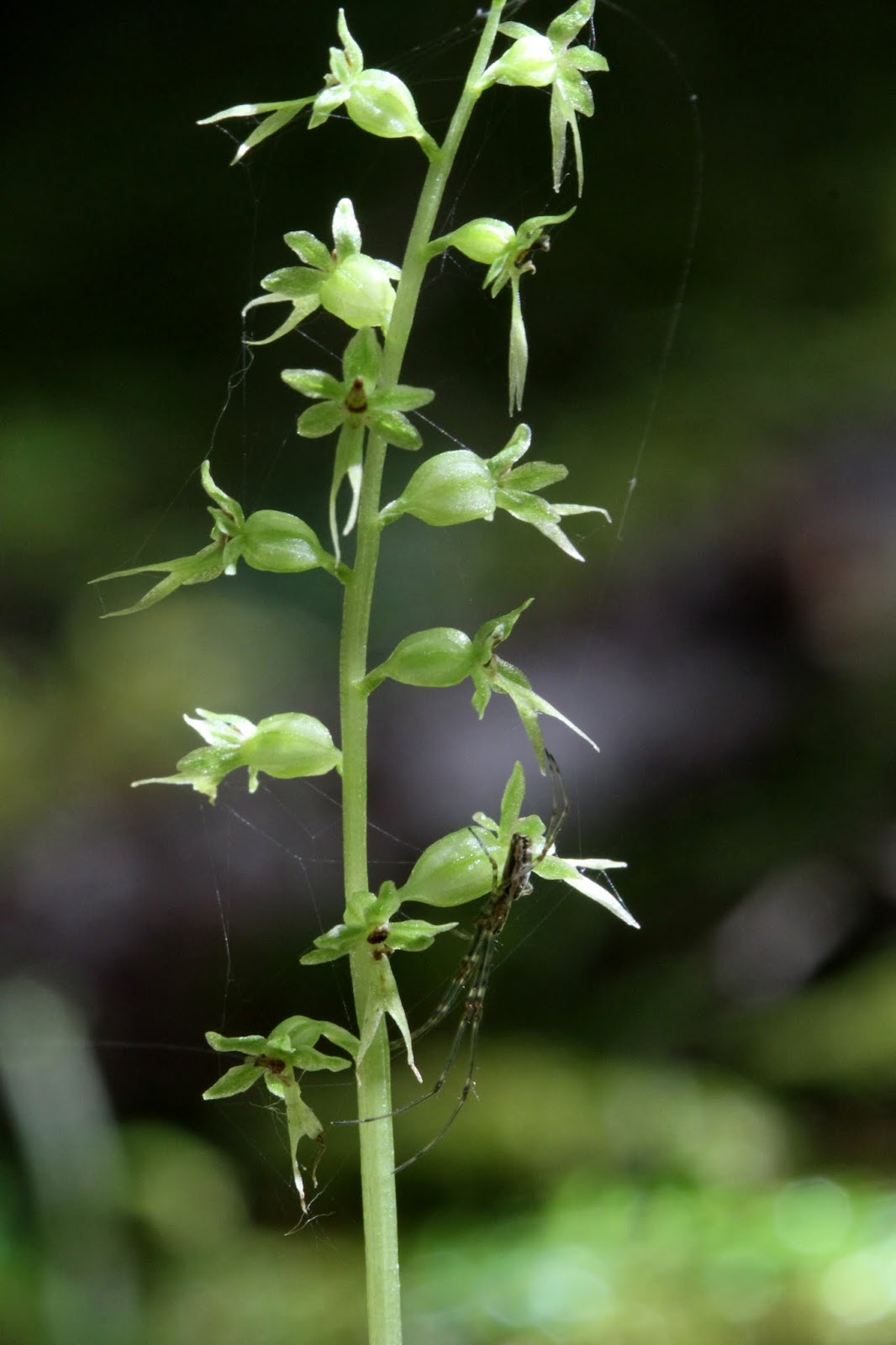

15.  Corallorhiza maculata var. occidentalis fma. intermedia (Western Spotted Coralroot)
only a couple of plants of this early-blooming variety


16.  Corallorhiza trifida (Early Coralroot)
this one familiar to our friends since it also grows in Europe


17.  Listera banksiana (Northwestern Twayblade)
after searching hard I finally found a couple of plants in bloom


We very much enjoy orchid hunting but it is even more exciting to be able to show someone else.
Martin has a blog of his own at which you can see some of the native orchids
of Germany and Europe, and some of these orchids as well.
http://www.lichtschnapper.de/blog/

Monday, February 6, 2012

Some Saprophytic Plants


For lack of anything else to publish, I thought I would post some pictures of the different saprophytic plants we've encountered in our rambles.  Actually, these are not considered saprophytic anymore and even the term is obsolete.  They are instead now referred to as mycotrophic. 

The older term, "saprophytic," meant that these plants fed off decaying plant material in the soil.  While that is not entirely untrue, the fact is that they get their nutrients through a symbiotic (mutual) relationship with a soil fungus named mycrorrhiza and not directly from the soil.

In ordinary terms, these plants are usually leafless and without chlorophyll.  In our area they include a number of orchids, the Coralroots, of which Washington has five, as well as various other odd and unusual plants, the Vancouver Groundcones, Pinedrops and Candysticks.

The Coralroots are a group of orchids usually found in heavily forested and rather shady and dry areas.  Several of them have quite insignificant flowers, but some of them are very beautiful.  A couple are quite rare but some are very common and can easily be found.

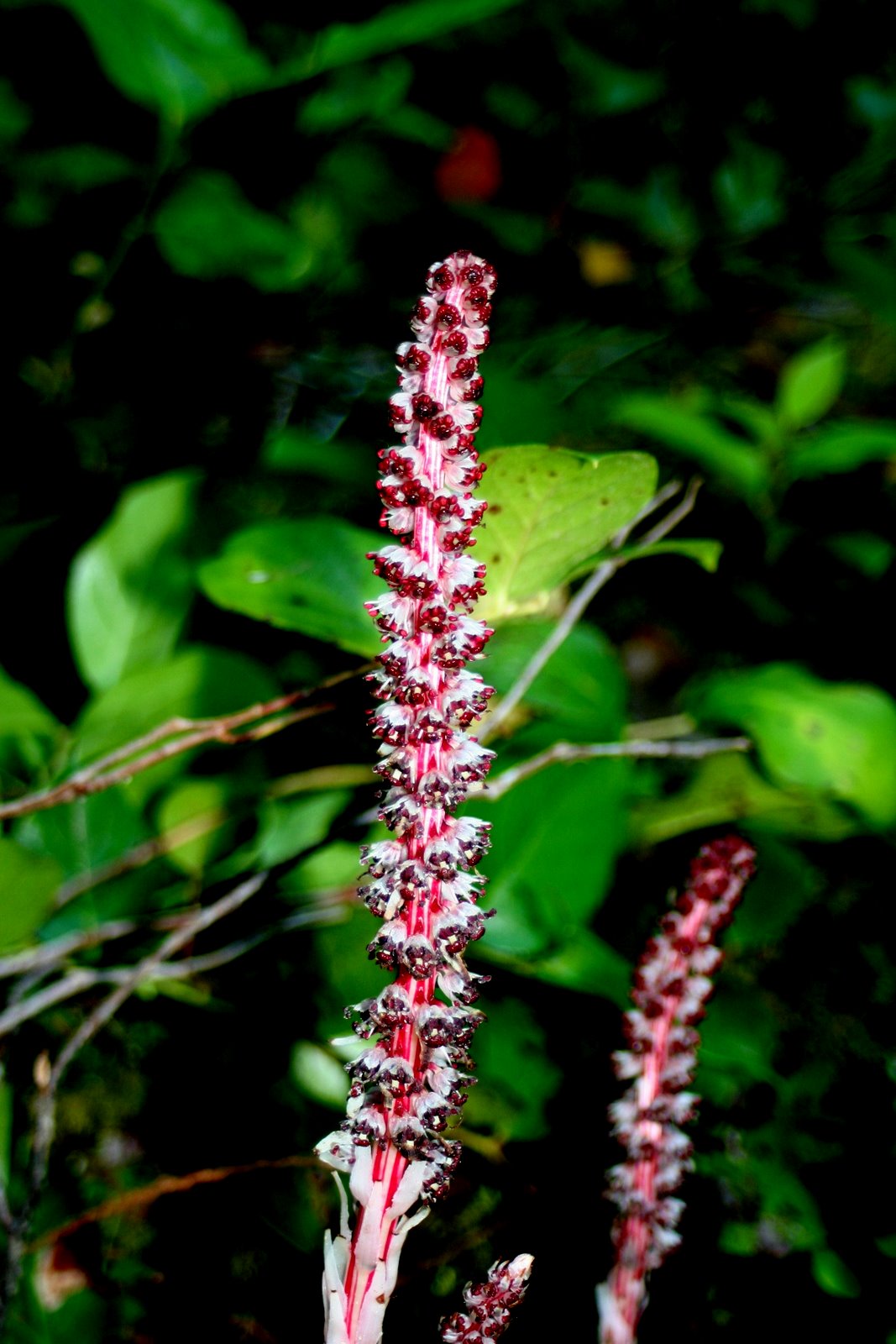
Ozette and Spotted Coralroots

Western Coralroot

Striped Coralroot

Early Coralroot

The only other mycotrophic orchid in the state of Washington is the most beautiful of them all, the Phantom Orchid, Cephalanthera austiniae, named for its bone white color and for the fact that it appears phantom-like on dark forest floors where nothing else seems to be growing.


Other mycotrophs, though not orchids, have a bizarre beauty of their own.  Most, like the Indian Pipes and Vancouver Groundcones, are smaller plants, but some like the pine drops can grow to several feet.  Finding them is always an unexpected delight.

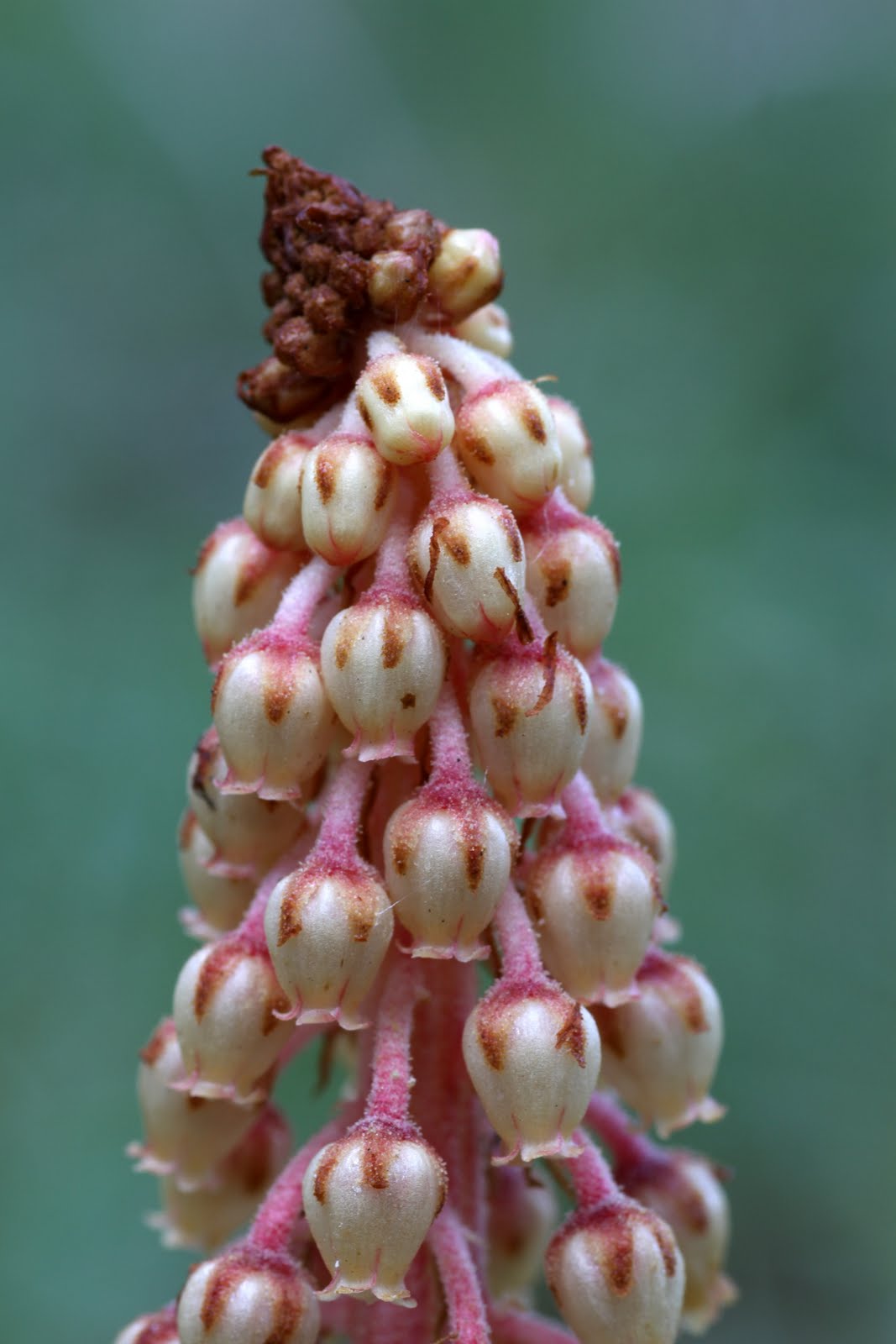
Indian Pipes

Vancouver Groundcones

Pinesap

Candystick

Pinedrops

Gnome Plan


Monday, June 7, 2010

Whidbey Island

My wife and I decided to take the afternoon off and about 1:00 headed for Whidbey Island and the Pacific Rim Campus of the Au Sable Institute near Coupeville. We wanted to see the rare Ozette Coralroot (Corallorhiza maculata var. ozettensis) which had been discovered there in 2002, the first location for this plant outside the Olympic Peninsula.

We stopped first at Deception Pass just before the bridge to take pictures of some of the wildflowers there. Some of those we photographed were:

Lanceleaf Stonecrop (Sedum spathulifolium)
Cluster Thistle (Cisium brevistylum)
Broad-leaved Arnica (Arnica latifolia)
Puget Sound Gumplant (Grindelia integrifolia)
Common Yarrow (Achillea millefolium)
South of the town of Oak Harbor a farmer was cutting hay along the road and a number of eagles, both adult and immature, were foraging for rodents in the cut hay. We stopped there for quite a while for pictures. Though common at certain times of the year, the Bald Eagle is always worth stopping for. Some of the eagles were being harassed and chased by the blackbirds that were also foraging in the cut hay.

Arriving finally on the grounds of the Au Sable Institute, we started into the woods near an old barn and found a group of students from the Institute with two of their instructors. They had been examining a Barn Owl nest with several chicks and invited us to have a look.

In the woods we found what we were looking for, the Ozette Coralroot. The Western Coralroots, which had been in bloom a few weeks before were nearly finished, but the Ozettes were in full bloom.

In and along the edge of the woods we photographed several other wildflowers, the dainty sprays of the Smooth Alumroot (Heuchera glabra) and the Coast Tarweed (Madia sativa).

After stopping in Mount Vernon for our evening meal we arrived home thankful for a relaxing and enjoyable afternoon.

Notes
(1) There is a brief article that I've written about the Ozette Coralroot on the website of the American Orchid Society: www.aos.org/
(2) I almost certainly have misidentified some of the wildflowers. Anyone who knows better is asked to drop me a note correcting my mistakes.
(3) The picture of the Deception Pass bridge was taken by my daughter-in-law and the picture of the owl was taken by my wife.