Showing posts with label platanthera aquilonis. Show all posts

Wednesday, August 24, 2011

Canadian Rockies 2011


Since we have family in Edmonton, a son-in-law, a daughter, a granddaughter and a soon-to-be second grandchild, we have opportunity nearly every summer to visit the Canadian Rockies.  The past two summers we went backpacking in Mount Robson Provincial Park in British Columbia: http://ronaldhanko-orchidhunter.blogspot.com/2010/07/backpacking-in-canadian-rockies.html.  This year we were unable to do the backpacking because of other obligations, but did manage to get in a full day of sight-seeing in Robson and in Jasper National Park in Alberta.

Maligne Lake, Jasper

We left home very early Monday morning and drove through the night, arriving at Robson about 6:00 am at the Berg Lake trailhead.  My wife had a very bad headache and wanted to sleep a while in the car, but I did some hiking up the trail on my own, following the river and going as far as the Kinney Lake campground, arriving back at the car at around 11:00 am.

Kinney Lake

We were a week later than last year but because of a very cold and wet spring many of the wildflowers we had seen earlier last year were still in bloom this year.  Some of the wildflowers I saw were the Common Harebell (Campanula rotundifolia), Red Clover, a non-native (Trifolium pratense) and Sticky Geranium (Geranium viscosissimum), shown here in the order listed.


We had gone especially to see the orchids, however, and I counted ten species and varieties in the few hours I hiked.  One species, the Lesser Rattlesnake Orchis (Goodyera repens) was not yet in bloom.  The two Lady's Slippers were nearly finished and I had to look hard to find some decent flowers.  One species we had seen the year before, the Pad-leaved Orchis (Platanthera orbiculata) I did not find.

Small Round-leaf Orchis (Amerorchis rotundifolia)

Sparrow's-egg Lady's Slipper (Cypripedium passerinum)

Large Yellow Lady's Slipper (Cypripedium parviflorum var. pubescens)

Blunt-leafed Rein Orchis (Platanthera obtusata)

Northern and Heart-leaved Twayblades (Listera borealis and cordata)

Leaving the Berg Lake trailhead we drove across the rest of Mount Robson Park and then through the north part of Jasper National Park, stopping often to examine the wildflowers and to take pictures.  We found one of my favorite wildflowers, the Rattlebox, in bloom along with a number of orchids we had not seen on the Berg Lake trail, another five species and varieties, shown below.

We also found along the roadside the Yellow Clematis (Clematis tangutica), here an invasive weed, but very beautiful.  When the sun came out later in the day there were a lot of butterflies but I managed a good shot of only one of them, the White Admiral (Limenitis arthemis). 


One of the joys of driving through this area is that the roadsides are filled with white and green Platantheras (Bog Orchids) at this time of the year, and this year was no exception.  We saw thousands of these native orchids in every wet boggy area along the way, and not only found them but one new native orchid, Coeloglossum viride var. virescens, the Long-bracted Green Orchis.


Alaskan Piperia (Piperia unalascensis) and Northern Green Bog Orchis (Platanthera aquilonis)

We found these orchids not only on the main east-west road through Robson and Jasper, but also on the Maligne Lake Road, one of the most scenic drives in Jasper, and which we followed nearly to its end.  There we not only found the Coeloglossum but more of the Yellow Lady's Slipper, along with thousands of Wood Lilies and other wildflowers.

Long-bracted Green Orchis (Coeloglossum viride var. virescens)

Maligne Lake

Large Yellow Lady's Slipper (Cypripedium parviflorum var. pubescens)

Wood Lily (Lilium Philadelphicum)

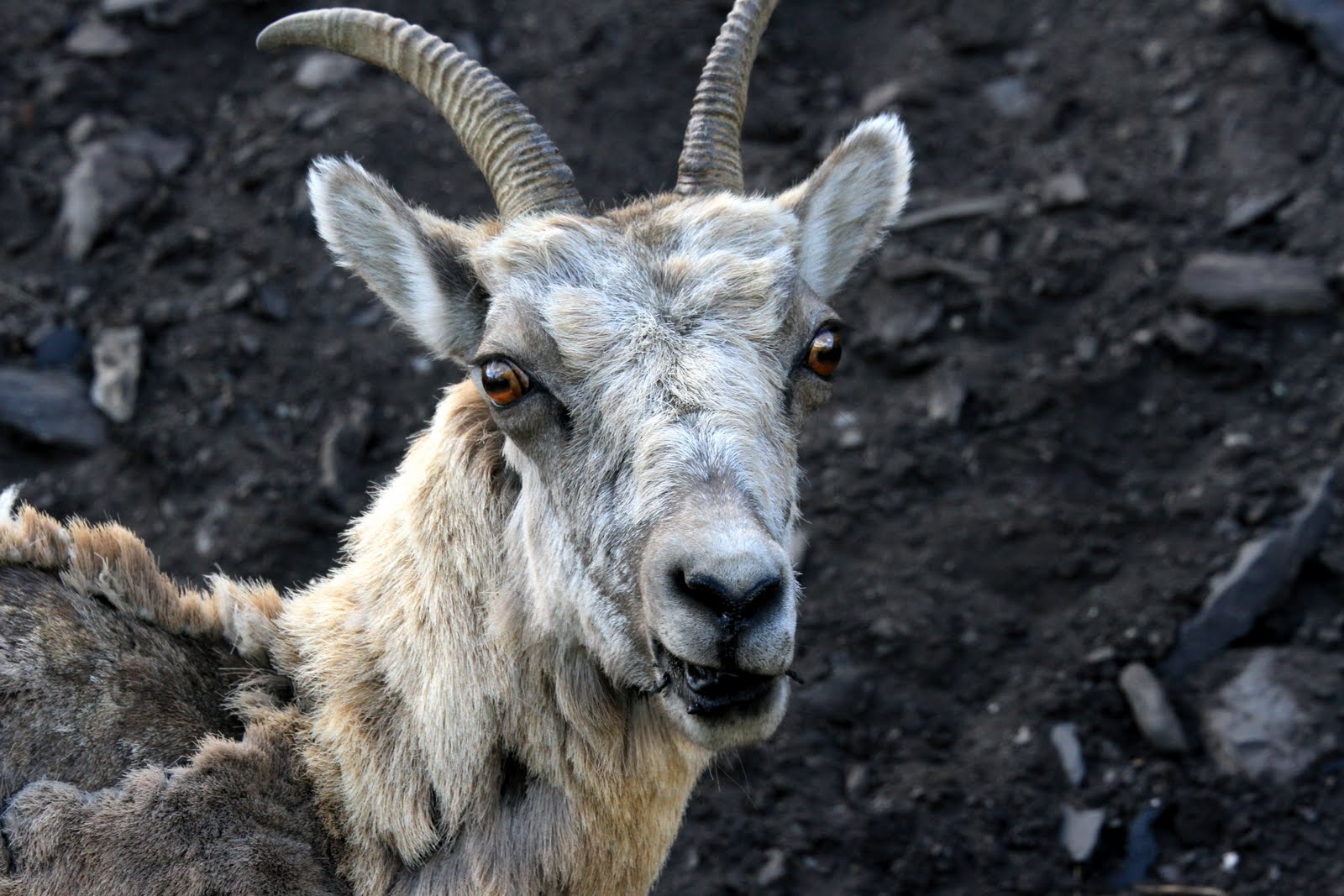
This year was also one of the best for wildlife.  We saw several black bear, a number of deer, bull elk and moose with their antlers still in velvet, some mountain sheep looking a bit ratty with their half-shed winter coats, and a coyote near Jasper town.  In every case were able to get pictures as souvenirs.  Finishing our sightseeing later that evening we spent the night in Hinton, east of Jasper, and went on to family the next morning.


On our way home we made sure we had time to hike in Robson once again and this time hiked together and further up the Berg Lake Trail.  In addition to the orchids I had seen a week earlier, we also saw a number of wildflowers that included Goatsbeard (Aruncus sylvester) and Red Columbine (Aquilegia formosa).


Thursday, July 1, 2010

British Columbia and Alberta, 2010

Monday, Tuesday and Wednesday, June 28-30

Platanthera dilatata var. albiflora

Left Lynden Monday night at around 11:00 after starting and coming back for things we had forgotten including passports. This is very unlike me (my wife is different) since I usually have everything organized days ahead of time (is that obsessive or what?).

We followed the Trans-Canada Highway to Kamloops and then the Yellowhead Highway north from Kamloops. Drove until about 3:00 am, switching drivers once, when we found a rest area not far north of the North Thompson Provincial Park, where we slept for a couple of hours, waking about 5:00 am around dawn.


Began to see wildflowers including native orchids along the roadsides and stopped numerous times to take photos, not arriving in the area of Tete Jaune Cache, our first destination, about 10:30 am.

Yellow Rattle, Rhinanthus minor

Some of the wildflowers we photographed were the Pink Wintergreen, Pyrola asarifolia, the Columbia Lily, Lilium columbianum, which seemed to be growing everywhere, the Red Columbine, Aquilegia formosa, the Cow Parsnip, Heracleum maximum, and the Orange Hawkweek, Hieraceum aurantiacum.


But we were looking for native orchids and we found them, just as we had on a previous trip. Growing everywhere along the highway, especially on the wet banks and in the ditches were two varieties of Platanthera dilatata. We found both variety albiflora, the Bog Candle, and variety dilatata, the Tall White Northern Bog Orchis.


The three varieties of this plant are very interesting. They are distinguished mainly by the length of the spur, variety albiflora having a very short spur that is shorter than the lip, variety dilatata having a spur about the same length as the lip and variety leucostachys (which we did not see) having a spur much longer than the lip.

This would seem a very minor thing, except it means that each of these varieties probably has a different pollinator. We noticed, too, that they grow in different locations. We at least never found the two varieties we saw growing in the same location.

We also found three other Platanteras growing in and among the white P. dilatata: P. huronensis, the Green Bog Orchis, P. aquilonis, the Northern Green Bog Orchis, distinguished by a yellowish lip and a thickened spur, and P. stricta, distinguished by a narrow, squared-off lip and a “scrotiform” spur.

These were extremely hard to distinguish, even with a good key, however, since the variations between the different species are never clearly distinguishable, and as Brown says, “Throughout much of the Pacific Northwest the several species of green-flowered Platanthera tend to intergrade.”  The picture below and to the right is of a plant that is probably Platanthera huronensis, but the flower color is more like that of P. aquilonis.


In the area of Tete Jaune Cache we had hoped to see the Large Yellow Lady’s Slipper (Cypripedium parviflorum var. pubescens) and followed some back roads in the area to a place near the river where we had previously seen it in abundance. It was, however, almost completely finished, with only a few flowers still in bloom in that area and so we were able to get some decent photos of these very beautiful flowers.


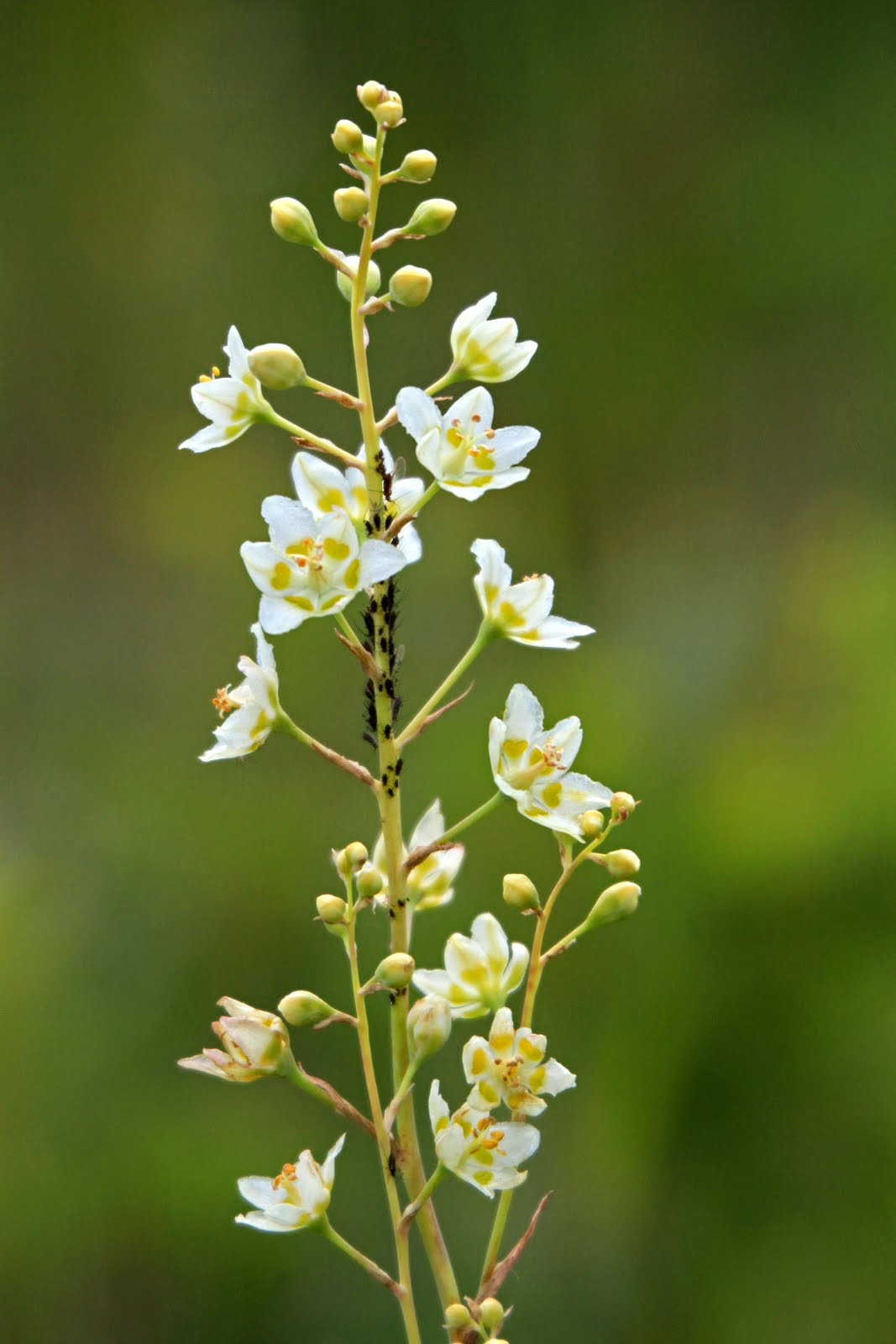
We also took pictures of the river, of the Death Camas (Zigadenus elegans), which was growing in the drier areas and which is obviously not death to aphids, of the green-flowered Platanthera which I could not identify (shown above), and of a butterfly and hoverfly visiting the same flower.


Finishing there we traveled northwest to the town of Dunster where we hoped to find the Mountain Lady’s Slipper (Cypripedium montanum), and find it we did, growing by the hundreds along a steep slope in the dappled shade of deciduous trees and underbrush.


These were covered with what appeared to be the "fluff" of Cottonwood trees, as is evident from most of the pictures. This did not distract, however, from the elegance of these beautiful flowers.


On some of the flowers tiny beetles were crawling all over the area where the pollen is found. Whether these are the actual pollinators of these plants I do not know, but they can be seen on the lip and around the staminodes.


After taking numerous photos there and suffering the stares of the passersby, we went on to the river, a little further down the road, and were delighted to find numerous swallowtails, the Canadian Tiger Swallowtail, if I am not mistaken, resting in the wet mud on the riverbank and in the plants nearby.  They were so passive that we could get within inches of them without them flying away, though when my wife's shadow fell on them they all flew off.  They were perched on top of each other and with their wings interlaced.


We traveled back from Dunster to the Mount Robson Visitors’ Center where we asked some questions about the next week’s backpacking trip, taking pictures along the way. There we had to decide between doing some day-hiking along the Berg Lake Trail or going on to Jasper National Park and doing some sightseeing there.

Since we were both tired from lack of sleep and crawling around on the ground after wildflowers, and since we would be hiking the Berg Lake trail the following Monday, we chose the latter option and headed for Jasper, a decision that proved the right one. Along the road to Jasper we saw a mother black bear and her older cub and stopped with a number of others to take pictures.


Arriving in Jasper we headed up the Maligne Lake Road where we saw some elk feeding, mainly cows, though on the way back we saw a huge bull elk with his rack still in velvet.


Not far up the road we stopped and visited the Maligne Canyon and falls, which, though a popular tourist destination, is nevertheless quite impressive. Both the narrow canyon which the water has carved and the rush of water far below unique, though the narrowest parts of the canyon are so deep and dark that they are almost impossible to photograph.  There is quite a bit of hiking one can do along the river, but we were too tired to do more than the short tourist circuit.


On the road to Maligne Lake we saw a beautiful lily, the Wood Lily, Lilium philadelphicum. This lily grows only to about a foot tall, but is exquisitely beautiful. A stiff breeze had kicked up and these proved very difficult to photograph.


We also found there a blue Columbine, Aquilegia brevistyla, and the White-leaved Wintergreen, Pyrola picta. My wife discovered the work of leaf miners nearby and we spent considerable time photographing the beautiful patterns these make.


Further up the road we found one solitary clump of the Yellow Lady’s Slippers (Cyp. parviflorum var. pubescens), which made up for the lack of flowers at the previous location. These were in full late evening sun and very difficult to photograph as a result.


In the end we spent too much time photographing wildflowers and did not make it all the way to Maligne Lake. We took pictures of Medicine Lake on the way and of a yellow Columbine there (Aquilegia flavescens, the Golden Columbine).


Turning back we picked up the Yellowhead Highway once again and traveling east saw some rather ratty looking Mountain Goats along the road and stopped to take pictures of Jasper Lake and the mountains in the evening sun.


Surfeited with all we had seen and completely shattered we stopped in the first town we came to, Hinton, Alberta. After getting some supper there, we slept the night in the van before going on to our son-in-law and daughter in Devon, a suburb of Edmonton, where we were delighted to see our new granddaughter Kailyn, born June 7th, whom we both agreed is the most beautiful baby we’ve ever seen.